Posts

V2G: Vehicle-to-Grid

Image
Bi-directional power interfaces are finally maturing and getting standardized. On a personal device level this has been possible thanks to USB-C ports supporting USB-PD (Power Delivery) technology. I can use my phone to charge my earbuds. Newer phones can do this even without cables, offering reverse wireless charging. The thing with energy is that there are times when it is fully abundant (a phone at home) and there are times when it is very scarce (a long hike-through trip). And it is very similar on the grid level. Thanks to wind and photovoltaic power there are times when we almost don't need any traditional power plants. But then there are periods (say chilly but windless winter evening) when we are hungry for any kilowatt produced by polluting coal plants. The grid-level solution is around the corner thanks to the Vehicle-to-Grid (V2G) technologies.  In Germany Nissan has teamed up with Fraunhofer and Bosh for the pilot i-rEzEPT project . A Nissan Leaf serves as a larga capac...

Universal Supply Bus, Type-C

Image
It seems funny to admit I have been fascinated by cables and connectors . But it is much deeper than that. Back in the old days personal computers were plagued by the cable mess. Each box had a dozen or so different cables hanging out with as many as five separate ones (power, VGA, USB, audio in, audio out)  necessary at the same time to connect a monitor. Other accessories, like mice, often required separate communication (RS-232) and power cables. Because each cable had its own purpose. The power cable to deliver power, the vga cable to deliver video (but no audio), the usb cable to deliver data and the audio cables to deliver audio in one direction (hence two were often needed). Things started to converge with inventions like HDMI (audion and video in one, but no power) and USB, especially when the latter started enabling more than 2.5W (5V at 0.5A) of power. It was 15 years ago when I first called USB the Universal Supply Bus . USB had (what has been HDMI's biggest drawback) a ...

Palm Phone

Image
Palm Pilot was my first touch screen device. 25 years ago, it was revolutionary. It turns out Palm still lives today, in a form of a tiny Android phone - the Palm Phone. This device is useless as a primary phone, as Palm went a bridge too far squeezing the battery such that it lasts half a day on light use. But with volume and weight of 25% of a typical 2021 phone, it is great for casual use. It runs proper Android and just about any app you may want. And Palm did really a good job customizing the UI to fit the small screen - the launcher is first class. It can be a backup on the road. Broken screens happen. and this thing is so tiny it is no brainer to carry it as a backup device when traveling. It is a great "fitness" phone, if you need one. Again the tiny nature helps with any activity and it is waterproof. There is even a specially designed custom armband which puts the on the forearm - easy to navigate things like music or calls. For me it is primarily an audiobooks-on-t...

Citroën AMI

Image
Electric cars are surely the future, but most brands have been offering just faster horses. From Teslas to Volkswagens it has been a yawn... Better 0-60, more touch screens. No qualitative change. And that is precisely why I'm so excited by Stellantis'  Citroën AMI . What a great car! I own two vehicles. One is a special version of 2005 Subaru Forester STI . Probably the most fantastic car ever built by Subaru. My other one is the Boosted Rev - an electric scooter. Probably, again, the best electric scooter ever built. Unfortunately also the one that brought the company which created it to bankruptcy. The STI and the Rev have many things in common - they both are sleepers. Phenomenal performance and handling in ordinary looks. I use the Rev almost everyday from April till October. It is great on warm sunny days. Not that great when the weather is cold. And terrible when it rains. And this is when I switch to the STI. But driving a performance car on crowded city streets is an ...

AirTags: The Strained Privacy

Image
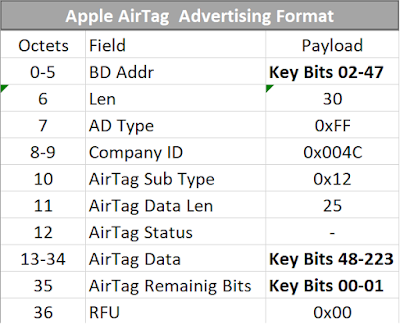
On the positive side Apple AirTags are great. Tiny, long lasting, ultra-wideband enabled (to enable directional indicators when locating a lost one). And of course, the key advantage of this system is the crowdsourced network of billions of iPhones globally, which can help reporting a lost device. And on the surface the system is designed to protect privacy. But not all that glitters is gold. Let's scratch that surface a bit. While AirTags are designed to protect the owner, they do not protect against malicious owners. The simplest use case is that I buy an AirTag and drop it in a pocket of a person I want to track. Instantly I have that person pinpointed on a map, in real time. A stalker's dream. Technically if that person happens to have an iPhone, it will eventually start alerting about a "foreign" tracking device she carries, but that is only on an iOS device. Non-iOS users are in the cold. Secondly, AirTags internally do not implement a secure environment and th...

Smart Lights

Image
It was December 2016 and we were entering the last straight to finalizing the Bluetooth Mesh specifications . I felt we were missing the crucial part of the architecture though, We had lights and sensors and other stuff specified. All good. The lights could react to on.off, dim level, color temperature and hue / saturation. And I was especially happy about how we defined sensors, reusing the wealth of data already defined by Bluetooth such as (GATT) Units - things like Celsius temperature or catalytic activity concentration (katal per cubic metre), and GATT Characteristics, giving us instantly definitions of close to 200 sensor types .  But lights and sensors had been in separate domains. Sensors could report occupancy and (too) low light level, while lights would still remain off, waiting for an "on" or "dim up" message to arrive. This is how everybody else have been doing things, from Z-Wave to ZigBee and DALI. There the protocol defined and messages within that p...

Bad Vision

Image
I blogged twice on Theranos in 2019. Actually the second post was bringing back the most profound statement by Steve Jobs about the " tremendous amount of craftsmanship between a great idea and a great product ". One would think the Bad Blood lesson was sufficient to stop lunatic CEOs from pitching sam stories and lemming investors from following them blindly. Apparently, not. In a remarkable public statement last week Tesla published on their FSD system, saying " ...there is no guarantee.... (the FSD) ...will perform as expected... (...) ...or at all. ". On the other hand they argued the AutoPilot was not engaged in the recent Texas crash and there was a driver at the wheel. At the same time the official Tesla Self-Driving Demonstration video  still starts by saying "The person in the driver's seat is only there for legal reasons. He is not doing anything. The car is driving itself.".  How does it all add up? If you're interested in the technic...